
ABH: 73.238
BF: 2250
Family: Noctuidae
Subfamily: Xyleninae
Taxon: Mniotype adusta
Authority: (Esper, 1790)
Vernacular: Dark Brocade

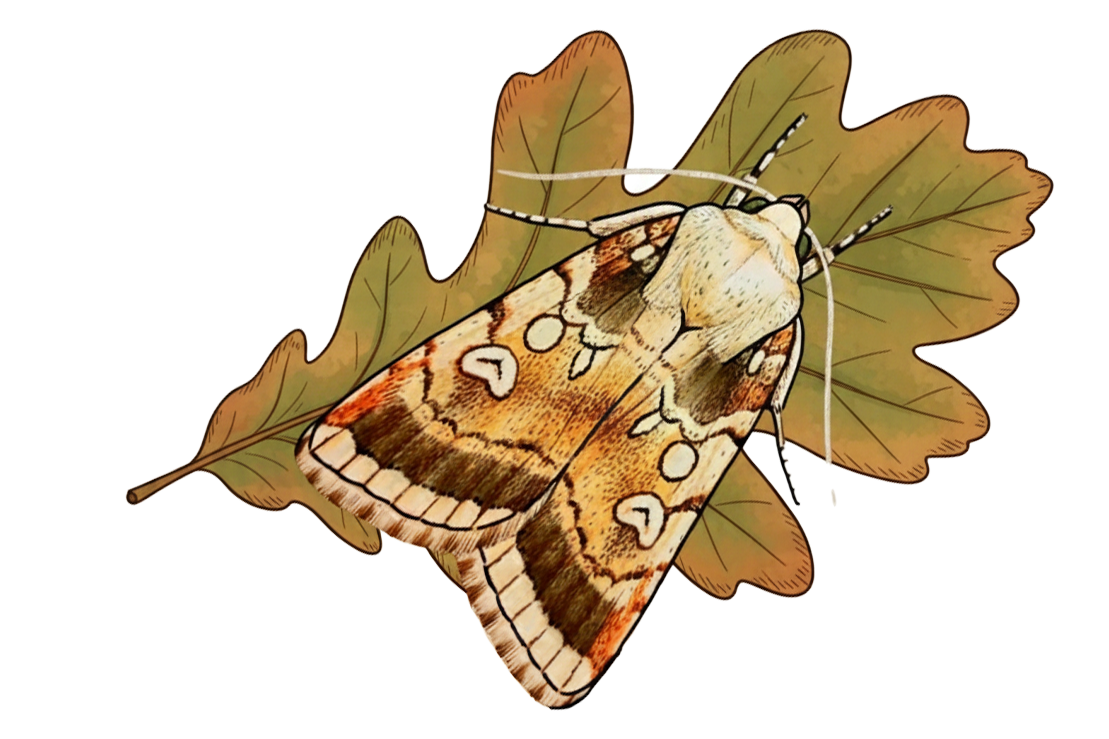
Account: Previously widespread on heathland, chalk downland, fens, woodland, gardens, moorland, upland grassland and sand-dunes throughout much of the British Isles, but decreasing, especially in southern coastal counties, and a species of conservation concern under the UK Biodiversity Action Plan Dark Brocade can be separated from Pale-shouldered Brocade Lacanobia thalassina and Cabbage Moth Mamestra brassicae by its completely hairless eyes, and from all Apamea species by the distinctive long eyelashes. Larva feeds on Heather, Bog-myrtle, Alder and Bladder Campion. A good photograph or specimen is required for this species to be considered for acceptance.
Wingspan: 40 — 46 mm
Surrey Flight Period: 26 May (1952) — 5 Jul (1958)
Foodplant: Gramineae, Polyphagous.
Status: Least Concern (LC)
UK BAP: BAP(R)
WCA:
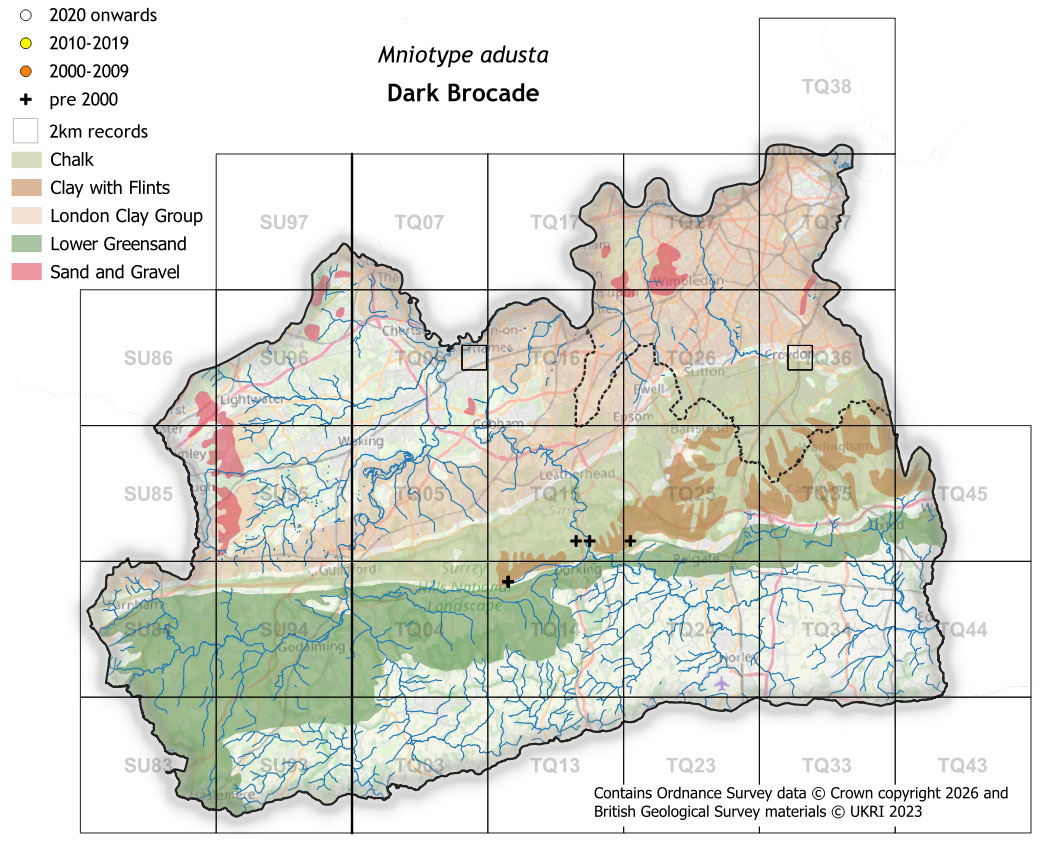
Click here to view the full geology map of Surrey.
Verification Grade: 2 — Care needed to identify 🤔
Further Information: https://www.ukmoths.org.uk/species/mniotype-adusta/
* Based on adult records only.
Records: 6
Individuals: 7
Earliest Year: 1893
Latest Year: 1965